49 Results for : imitates
-

History of China: A Captivating Guide to Chinese History, Including Events Such as the First Emperor of China, the Mongol Conquests of Genghis Khan, the Opium Wars, and the Cultural Revolution , Hörbuch, Digital, ungekürzt, 254min
If you want to discover the captivating history of China, then pay attention...The history of China is complex - perhaps, more complex than that of other nations. The ethnic groups that compose China go back to prehistoric times, and each group lent its own color to the enormous nation. It is not like a diluted mixture of all its cultures; rather, it is a collage.Yet, there are immutable elements still present today. Rice originated in China, and so did stir-frying. Anyone who has enjoyed a snack or two from a delightful swimming pool imitates the same practice in the water towns of China from times past.Brocade and printed silk fabrics were first created in China. Iridescent porcelain is a product of the Ming dynasty. The Chinese were among the first to develop blast furnaces. They were the first to invent fireworks and gunpowder. And the list goes on and on.As you listen to this book, you will note that history tends to repeat itself in the rise and fall of the many dynasties of China. However, you will also notice that there are clear distinctions between one era and the next. In History of China: A Captivating Guide to Chinese History, Including Events Such as the First Emperor of China, the Mongol Conquests of Genghis Khan, the Opium Wars, and the Cultural Revolution, you will discover topics such as:The Land of the Yellow EmperorImperial China EmergesThe Supremacy of the Han, 202 BCE - 220 CEThe Golden Age: The Tang Dynasty, 618 - 907The Song Dynasty, 960 - 1279Kublai Khan: The Yuan Dynasty, 1271 - 1368The Great Ming Dynasty, 1368 - 1644The Rise of the Qing, 1636 - 1912Revolutionary MadnessThe Republic of China to the People’s Republic of ChinaAnd much, much more!So, if you want to learn more about the history of China, scroll up and click the "buy now" button! ungekürzt. Language: English. Narrator: Edwin Andrews. Audio sample: https://samples.audible.de/bk/acx0/216271/bk_acx0_216271_sample.mp3. Digital audiobook in aax.- Shop: Audible
- Price: 9.95 EUR excl. shipping
-

The Principles of Aesthetics , Hörbuch, Digital, ungekürzt, 780min
The Principles of Aesthetics can be considered the definitive work on aesthetics, the philosophy of art, beauty, and taste. It is the result of a series of lectures given by Dewitt H. Parker, and gives a comprehensive review of a truly extensive subject. Every person has some sense of the beautiful and the ugly. We all admire certain images, combinations of sound, taste, smell, or feeling. But where does this enjoyment come from? If our tastes were all alike, we could find precise formulae that define the beautiful and discover the keys to the nature of art. But our tastes differ from one person to the next, and even from one moment to the next. This is what makes beauty a mystery. Art is a grasping at the intangible reality that surrounds and transcends our attempts to order the world. This is what makes the philosophy of aesthetics so fascinating. At the very least, it gives us insight into our nature as human beings. At best, it can let us glimpse the nature of truth beyond reason and intention. It has been said that art imitates nature. Perhaps some ephemeral quality of the natural world is reflected in our sense of beauty and taste. The philosophy of aesthetics is focused on these questions. It delves into the mysterious pool from which artists and poets derive their inspiration. With this piece, Dewitt H. Parker gives us a beautiful and thorough introduction into a field that points towards the mysteries of the human experience. A summary precedes the full narration, giving a biography of the author, as well as an overview, synopsis, and analysis of the work. The summary is capped by a brief look at the historical context of Dewitt's work, as well as the criticism and social impact it evoked. ungekürzt. Language: English. Narrator: Terry Rose, Jason Leikam. Audio sample: https://samples.audible.de/bk/acx0/077672/bk_acx0_077672_sample.mp3. Digital audiobook in aax.- Shop: Audible
- Price: 9.95 EUR excl. shipping
-

CSI: Crime Scene Investigation episodes
CSI: Crime Scene Investigation episodes ab 24.49 € als Taschenbuch: CSI: Crime Scene Investigation Butterflied Fannysmackin' Let It Bleed Toe Tags The Happy Place Art Imitates Life CSI: Trilogy Empty Eyes Deep Fried and Minty Fresh Redrum Sweet Jane Drops Out Big Shots You Kill Me Lab Rats. Aus dem Bereich: Bücher, Taschenbücher, Wirtschaft & Soziales,- Shop: hugendubel
- Price: 24.49 EUR excl. shipping
-

How Life Imitates Sports
How Life Imitates Sports - A Sportswriter Recounts Relives and Reckons with 50 Years on the Sports Beat: ab 15.93 €- Shop: ebook.de
- Price: 15.93 EUR excl. shipping
-
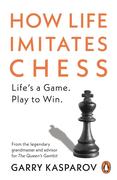
How Life Imitates Chess
How Life Imitates Chess: ab 9.49 €- Shop: ebook.de
- Price: 9.49 EUR excl. shipping
-

Mad Hatter MD
Mad Hatter MD - When Medicine Imitates Art: ab 9.99 €- Shop: ebook.de
- Price: 9.99 EUR excl. shipping
-
-
Captives Of The Wine Dark Sea
RIYL: Van Der Graaf Generator, Peter Gabriel Ära von Genesis, King Crimson und Gentle Giant.Schon seit 1987 sind Discipline als Band aktiv und sind seither eine der Top Bands der amerikanischen Progressive Rock Szene. Schlagzeuger Paul Dzendzel, Bassist Mathew Kennedy, Gitarrist Chris Herin ( auch Mitglied der Band Tiles) sowie Sänger und Keyboarder Matthew Parmenter haben sich für ihr neues Album mit Produzentenlegende Terry Brown (Rush, Fate s Warning) zusammengetan. One of the most important bands to come out of America in the last twenty-five years. Urteilt der Neuseeländer Kev Rowland über Discipline und wer sich die Mühe macht, das Web nach der Band zu durchforsten wird auf unzählige Blogs und Fanseiten stoßen, die die Detroiter gottgleich verehren. Aus dem existenten Katalog herausstechend, wird gerne das 1997er Album Unfolded Like Staircase genannt und genau an diesem Album knüpft das aktuelle Werk an. TRACKS: 1. The Body Yearns 2. Life Imitates Art 3. S 4. Love Songs 5. Here There Is No Soul 6. The Roaring Game 7. Burn The Fire Upon The Rocks- Shop: odax
- Price: 14.89 EUR excl. shipping
-
Captives Of The Wine Dark Sea (LP)
Limitiertes Vinyl! RIYL: Van Der Graaf Generator, Peter Gabriel Ära von Genesis, King Crimson und Gentle Giant.Schon seit 1987 sind Discipline als Band aktiv und sind seither eine der Top Bands der amerikanischen Progressive Rock Szene. Schlagzeuger Paul Dzendzel, Bassist Mathew Kennedy, Gitarrist Chris Herin ( auch Mitglied der Band Tiles) sowie Sänger und Keyboarder Matthew Parmenter haben sich für ihr neues Album mit Produzentenlegende Terry Brown (Rush, Fate s Warning) zusammengetan. One of the most important bands to come out of America in the last twenty-five years. Urteilt der Neuseeländer Kev Rowland über Discipline und wer sich die Mühe macht, das Web nach der Band zu durchforsten wird auf unzählige Blogs und Fanseiten stoßen, die die Detroiter gottgleich verehren. Aus dem existenten Katalog herausstechend, wird gerne das 1997er Album Unfolded Like Staircase genannt und genau an diesem Album knüpft das aktuelle Werk an. TRACKS: 1. The Body Yearns 2. Life Imitates Art 3. S 4. Love Songs 5. Here There Is No Soul 6. The Roaring Game 7. Burn The Fire Upon The Rocks- Shop: odax
- Price: 36.29 EUR excl. shipping
-
Music for Solo Cello
Cassado: Suite for solo cello I. Preludio - Fantasia II. Sardana (Danza) III. Intermezzo e danza finale Ysaye: Sonate Op. 28 for solo cello I. Lento e sempre sostenuto II. Poco allegretto e grazioso III. Adagio IV. Allegro Tempo fermo Ligeti: Sonate for solo cello I Dialogo II Capriccio Kodaly: Suite Op. 8 for solo cello I. Allegro maestoso ma appassionato II. Adagio III. Allegro molto vivace ---------------- When Johann Sebastian Bach composed his six cello suites around the year 1720, they were labeled "6 Suites a Violoncello Solo senza Basso." This curious title can be explained by the fact that it was a novelty at the time to write for cello alone, an example that would not be followed any time soon: not counting the various solo cello studies, capriccios, and other pieces composed by cellists for educational purposes, one needs to wait nearly two centuries before finding important repertoire in the medium. The famous Catalan cellist Pau Casals (1876-1973) was partially responsible for the rebirth of the solo cello repertoire: his "discovery" of Bach's cello suites at the beginning of his career and his subsequent efforts to propagate them helped convince the younger generation of composers to write for solo cello. The four works presented on this CD illustrate the rise of the modern solo cello repertoire. Common characteristics of this collection include a powerful rhetorical discourse, a rhapsodic character, and a complete technical mastery in writing for the instrument. That the four composers represented here had an excellent knowledge of the cello came from their own practical experience: Zoltán Kodály and György Ligeti had studied cello before becoming composers, the famous Belgian violinist Eugène Ysaÿe was competent enough to play the cello part in private chamber music evenings, and Gaspar Cassadó, Casals's student, was a celebrated cello virtuoso. Kodály's Sonata for Solo Cello, Op. 8 (1915) and Cassadó's Suite for Cello Solo (1925) are colored with regional flavor. As early as 1905, Zoltán Kodály (1882-1967) had traveled with Bartók to record the peasant and popular music of Central Europe. Reminiscences of these ethnomusicological travels are present in Kodály's sonata, not only in the imitation of traditional instruments (violin, percussion, cimbalom, etc.) and their modes of playing, but also in the poetic description of the landscapes in which the music was born. Perhaps in a more folkloric way but still with much panache and poetry, Gaspar Cassadó (1897-1966), in his Suite for Solo Cello, imitates flamenco singing and guitar playing. He also quotes the Catalan sardana dance with it's introduction for flabiol (Catalan piccolo recorder), it's grotesque cobla (traditional Catalan ensemble), and indispensable nostalgic solos played by the tible (Catalan shawm). Like Fritz Kreisler, Cassadó was accused of musicological crimes: he attributed some of his own compositions to famous composers of the past such as Frescobaldi, Couperin, Boccherini, and Schubert, calling them "transcriptions." A good example of Cassadó's skill in pastiche can be found in the second movement, Sardana, at the expression marking burlesco: here he literally forces the cellist to imitate the approximate intonation of a traditional village ensemble by writing a series of unisons in such wide fingering spans that no cellist can play them in tune. We should not forget to mention that the first theme of Cassadó's suite is an embellishment of the opening of Kodály's sonata, a nod to the older Hungarian composer. György Ligeti (1923-2006) wrote the two movements of his Sonata for Solo Cello at a five-year interval. The first part, composed in 1948 for a young cellist with whom he was secretly in love, consists of a musical dialogue between a woman and a man. The composer's gift was not reciprocated, however, and the work was left unperformed until Ligeti added a second movement in 1953 in response to a famous female cellist (with whom he was not in love, as the composer tells us), who commissioned a full sonata from him. During the communist period, the Hungarian Composer's Union refused to allow the work to be published or performed on the grounds that the second movement was too modern. This might amuse us today, because the work - composed under the influence of Kodály and Bartók - is much more traditional than Ligeti's later compositions. Like Cassadó and Casals, the violinist Eugène Ysaÿe (1858-1931) was a great admirer of Bach's solo works and among the first to include them on his concert programs. Ysaÿe shows his devotion to Bach in his Violin Sonata No. 2 "Obsession," where he quotes the opening of the Partita for Solo Violin in E-major. Although there are no direct quotations from Bach's solo violin works in Ysaÿe's Sonata for Solo Cello, Op. 28 (1923), we sense nevertheless that the famous violinist was more familiar with Bach's writing for solo violin than solo cello. This can be heard in the many chords and detailed contrapuntal writing, in Bach's solo cello works, chords are less frequent and the polyphonic lines are distributed in a more arpeggiated fashion. Ysaÿe's cello sonata, not as well-known as his six sonatas for violin but sharing many of the same difficulties, includes the composer's own fingerings. The work was dedicated to the Belgian cellist Maurice Dambois, with whom - along with pianist Yves Nat - Ysaÿe had formed a trio. While Pau Casals played a crucial role in the development of the solo cello repertoire at the beginning of the twentieth century, cellists such as Siegfried Palm and Mstislav Rostropovich inspired the following generations of composers. One needs only to reflect on composers such as Dallapiccola, Zimmermann, Henze, Scelsi, Britten, Sessions, Penderecki, Xenakis, Dutilleux, Ginastera, and Berio to understand the richness and diversity of the modern solo cello repertoire, which we hope to present to you in future recordings. NICOLAS DELETAILLE - TRANSLATION THOMAS SVATOS Nicolas Deletaille After having received his musical education in Belgium and in the USA, Nicolas Deletaille has begun his professional life as a concert performer. In the same time, he has recorded the Bach six Cello Suites, the Beethoven five Cello Sonatas, major works from the solo repertoire (Kodály, Cassadó, Ysaÿe, Ligeti) as well as chamber music CDs (Schubert, Dvorák, Franck, Tchaikovsky,...) Nicolas Deletaille has also earned distinction as an arpeggione player by recording the Schubert arpeggione sonata in the rare original arpeggione version with the vienese maestro Paul Badura-Skoda on an original 1820 pianoforte. Nicolas Deletaille has collaborated extensively with composers of our time. He has given approximately 50 world premiere creations, most of which were pieces written for him by composers from Belgium, France, Taiwan, USA, Italy, England, Switzerland, Korea, Norway and Canada. Nicolas Deletaille is currently a faculty member of the Eastern Mediterranean University, TRNC. Français Quand Johann Sebastian Bach composa ses six suites pour violoncelle vers 1720, elles furent baptisées « 6 Suites a Violoncello Solo senza Basso ». Ce titre curieusement redondant s'explique par l'originalité d'écrire à cette époque pour violoncelle seul. Cet exemple ne sera d'ailleurs pas suivi de longtemps : mis à part d'innombrables études, caprices et autres exercices de virtuosité, écrits par les violoncellistes eux-mêmes dans un but purement pédagogique, il faudra attendre que le célèbre violoncelliste catalan Pau Casals se fasse l'ambassadeur des Suites de Bach lors de ses tournées de concerts à l'aube du XXe siècle pour que des compositeurs se montrent peu à peu enclins à écrire des œuvres importantes pour violoncelle seul. Les quatre œuvres reprises sur ce CD, composées au cours de la première moitié du XXe siècle, s'inscrivent dans la cadre de ce développement du répertoire pour violoncelle seul. Elles ont en commun un discours rhétorique puissant, un c- Shop: odax
- Price: 24.64 EUR excl. shipping


