17 Results for : bactria
-

The Parthian Empire: The History and Culture of One of Ancient Rome's Most Famous Enemies , Hörbuch, Digital, ungekürzt, 86min
The Parthians in whose hands the empire of the east now is, having divided the world, as it were, with the Romans, were originally exiles from Scythia. This is apparent from their very name; for in the Scythian language exiles are called Parthi. During the time of the Assyrians and Medes, they were the most obscure of all the people of the east. Subsequently, too, when the empire of the east was transferred from the Medes to the Persians, they were but as a herd without a name, and fell under the power of the stronger. At last they became subject to the Macedonians, when they conquered the east; so that it must seem wonderful to everyone, that they should have reached such a height of good fortune as to rule over those nations under whose sway they had been merely slaves. Being assailed by the Romans, also, in three wars, under the conduct of the greatest generals, and at the most flourishing period of the republic, they alone, of all nations, were not only a match for them, but came off victorious; though it may have been a greater glory to them, indeed, to have been able to rise amidst the Assyrian, Median, and Persian empires, so celebrated of o]d, and the most powerful dominion of Bactria, peopled with a thousand cities, than to have been victorious in war against a people that came from a distance; especially when they were continually harassed by severe wars with the Scythians and other neighboring nations, and pressed with various other formidable contests. - An ancient Roman account of the Parthians. The Parthian people created an empire that lasted almost 500 years, from the mid-3rd century BCE until 224 CE, and it stretched from the Euphrates River in the west to Central Asia and the borders of Bactria in the east (Brosius 2010, 83). ungekürzt. Language: English. Narrator: Colin Fluxman. Audio sample: https://samples.audible.de/bk/acx0/070251/bk_acx0_070251_sample.mp3. Digital audiobook in aax.- Shop: Audible
- Price: 9.95 EUR excl. shipping
-

Samarkand: The History and Legacy of One of Asia's Oldest Cities , Hörbuch, Digital, ungekürzt, 78min
Samarkand is one of the oldest cities of Central Asia, founded nearly 3,000 years ago. The legendary city was the capital of the Sogdians, a trading people who facilitated the spread of commodities, religions, technologies, and ideas across the Silk Road between China and the rest of Eurasia. Samarkand was a key site along the ancient Silk Road, a place where a number of world cultures from the East and the West met and assimilated. As well as being a commercial center, it was a key religious site for the Zoroastrian, Buddhist, Christian, and Islamic faiths. The growth of Samarkand occurred at the same time as other major urban centers based on oases along the Silk Road, such as Khwarezm, Balkh (Bactria), and Bukhara. The city was conquered by Alexander the Great in 329 BCE and served as a base for his campaigns through Transoxiana. From the early Islamic period to the seventh century, the city prospered until it was completely destroyed by Genghis Khan in 1220. It was not until the 14th century that the city was rebuilt about one kilometer southwest of the ancient tell site. Although well-known for its trade, another part of Samarkand that makes its history so interesting is its association with the Timurid dynasty and its legendary founder, Tamerlane. Known by the Sogdians as Timur (meaning "iron"), he was one of the most extraordinary individuals to have ever existed. From his origins as a member of the tribal aristocracy, through political and military activity - and almost supernatural power - he came to dominate Transoxania and much of Iran. A lot of his behavior as an emperor was developed on the model of the Mongol empire that had existed before him, as he embarked on a mission to create the largest Turkic Muslim Empire of Eurasia. Tamerlane chose Samarkand as the capital of this empire. He loved this city above all others, and after each of his military expeditions he would bring back local artisans and craftsmen to live and work there. ungekürzt. Language: English. Narrator: Jim D. Johnston. Audio sample: https://samples.audible.de/bk/acx0/083645/bk_acx0_083645_sample.mp3. Digital audiobook in aax.- Shop: Audible
- Price: 9.95 EUR excl. shipping
-

The Achaemenid Persian Empire: The History and Legacy of the Ancient Greeks’ Most Famous Enemy , Hörbuch, Digital, ungekürzt, 202min
By the favor of Ahuramazda these are the countries which I got into my possession along with this Persian people, which felt fear of me and bore me tribute : Elam, Media, Babylonia, Arabia, Assyria, Egypt, Armenia, Cappadocia, Lydia, the Greeks who are of the mainland and those who are by the sea, and countries which are across the sea, Sagartia, Parthia, Drangiana, Aria, Bactria, Sogdia, Chorasmia, Sattagydia, Arachosia, Hinduš, Gandara, Sacae, Maka. - An inscription on a terrace wall in Persepolis, circa 521 CE Lying in the middle of a plain in modern day Iran is a forgotten ancient city: Persepolis. Built 2,500 years ago, it was known in its day as the richest city under the sun. Persepolis was the capital of Achaemenid Persian Empire, the largest empire the world had ever seen. But after its destruction, it was largely forgotten for nearly 2,000 years, and the lives and achievements of those who built it were almost entirely erased from history. Alexander the Great’s troops razed the city to the ground in a drunken riot to celebrate the conquest of the capital, after which time and sand buried it for centuries. It was not until the excavations of the 1930s that many of the relics, reliefs, and clay tablets that offer so much information about ancient Persian life could be studied for the first time. Through archaeological remains, ancient texts, and work by a new generation of historians, a picture can today be built of the Achaemenid Persian Empire and their capital city of Persepolis. Although the city had been destroyed, the legacy of the Persians survived, even as they mostly remain an enigma to the West and are not nearly as well understood as the Greeks, Romans, or Egyptians. In a sense, the Achaemenid Persian Empire holds some of the most enduring mysteries of ancient civilization. The Achaemenid Persian Empire: The History and Legacy of the Ancient Greeks’ Most Famous Enemy looks at one of history’s largest empires./p ungekürzt. Language: English. Narrator: Colin Fluxman. Audio sample: https://samples.audible.de/bk/acx0/102347/bk_acx0_102347_sample.mp3. Digital audiobook in aax.- Shop: Audible
- Price: 9.95 EUR excl. shipping
-

The Empires of Ancient Persia: The History and Legacy of the Achaemenids, Parthians, and Sassanids in Antiquity , Hörbuch, Digital, ungekürzt, 344min
Lying in the middle of a plain in modern day Iran is a forgotten ancient city: Persepolis. Built two and a half thousand years ago, it was known in its day as the richest city under the sun. Persepolis was the capital of Achaemenid Persian Empire, the largest empire the world had ever seen, but after its destruction, it was largely forgotten for nearly 2,000 years, and the lives and achievements of those who built it were almost entirely erased from history. Alexander the Great’s troops razed the city to the ground in a drunken riot to celebrate the conquest of the capital, after which time and sand buried it for centuries. It was not until the excavations of the 1930s that many of the relics, reliefs, and clay tablets that offer so much information about Persian life could be studied for the first time. Through archaeological remains, ancient texts, and work by a new generation of historians, a picture can today be built of this remarkable civilization and their capital city. Although the city had been destroyed, the legacy of the Persians survived, even as they mostly remain an enigma to the West and are not nearly as well understood as the Greeks, Romans, or Egyptians. In a sense, the Achaemenid Persian Empire holds some of the most enduring mysteries of ancient civilization. The Parthian people created an empire that lasted almost 500 years, from the mid-3rd century BCE until 224 CE, and it stretched from the Euphrates River in the west to Central Asia and the borders of Bactria in the east (Brosius 2010, 83). In fact, the expansive empire challenged the Romans on numerous occasions for supremacy in the Near East, created the first sustainable link between the peoples of Europe and East Asia, and followed a religion that many consider to be the oldest form of monotheism in the world; but despite these accomplishments the Parthians are often overlooked in favor of the Achaemenid and Sassanid Persians who came before and after them respectively, n ungekürzt. Language: English. Narrator: Colin Fluxman. Audio sample: https://samples.audible.de/bk/acx0/103990/bk_acx0_103990_sample.mp3. Digital audiobook in aax.- Shop: Audible
- Price: 9.95 EUR excl. shipping
-

180s BC deaths
180s BC deaths ab 17.99 € als Taschenbuch: 180 BC deaths 181 BC deaths 182 BC deaths 183 BC deaths 184 BC deaths 185 BC deaths 187 BC deaths 188 BC deaths 189 BC deaths Hannibal Plautus Antiochus III the Great Ptolemy V Epiphanes Demetrius I of Bactria. Aus dem Bereich: Bücher, Kunst & Musik,- Shop: hugendubel
- Price: 17.99 EUR excl. shipping
-

The Hellenistic Settlements in the East from Armenia and Mesopotamia to Bactria and India
The Hellenistic Settlements in the East from Armenia and Mesopotamia to Bactria and India: ab 101.99 €- Shop: ebook.de
- Price: 101.99 EUR excl. shipping
-
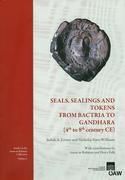
Seals Sealings and Tokens from Bactria to Gandhara (4th to 8th century CE)
Seals Sealings and Tokens from Bactria to Gandhara (4th to 8th century CE) - With contributions by Aman ur Rahmn and Harry Falk: ab 50 €- Shop: ebook.de
- Price: 50.00 EUR excl. shipping